The Serra Verde Express: Complete Guide to the Curitiba–Morretes Railway
The descent from Curitiba to the coast on the Serra Verde Express is, without exaggeration, one of the great train journeys of the Americas. In roughly three hours the line drops nearly 900 metres through the Serra do Mar, threading tunnels, curved viaducts and untouched Atlantic Forest before arriving in the colonial town of Morretes. This guide covers the route in detail, the differences between travel classes, exactly what to watch for from your window, and how to book so the day runs smoothly.
Why this railway is worth the trip
Opened in 1885, the Curitiba–Paranaguá railway was an engineering feat of its era, built to connect Paraná's highland capital with the Atlantic port at Paranaguá. Today the passenger service, operated as the Serra Verde Express, runs the most spectacular stretch of that historic line, carrying visitors down the forested escarpment of the Serra do Mar to the riverside town of Morretes.
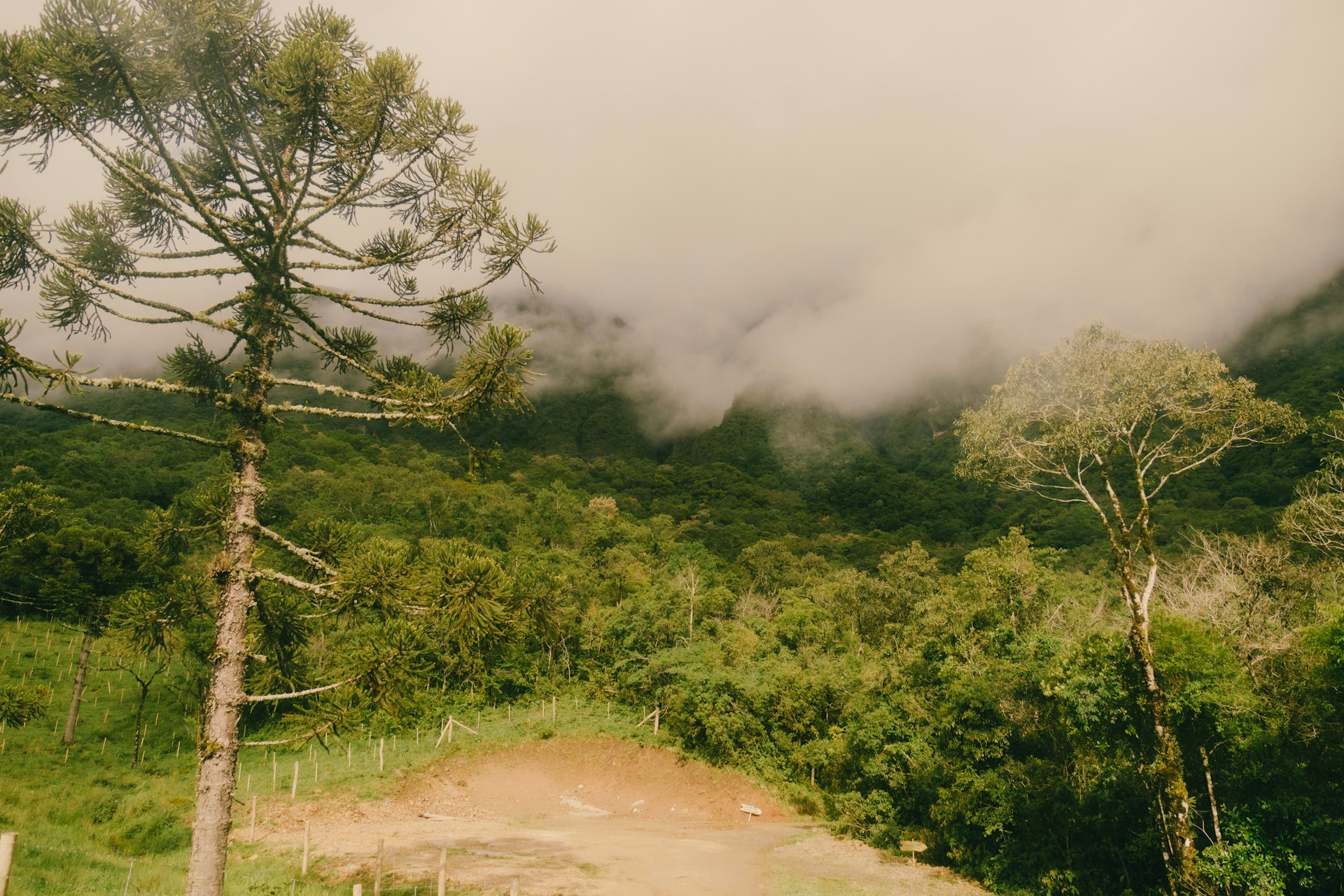
What sets this journey apart is the concentration of scenery. Within the first hour the train leaves the pine-fringed plateau around Curitiba and enters one of the best-preserved corridors of Atlantic Forest (Mata Atlântica) in southern Brazil, a UNESCO Biosphere Reserve. You pass more than a dozen tunnels and cross viaducts poised over deep green valleys, with waterfalls and granite peaks framing almost every window.
It is an easy, low-effort day out that rewards travellers of every age. You are seated the entire way, the pace is gentle, and the payoff is a long lunch of regional food in a town that has changed little in a century. For visitors basing themselves in Curitiba, it is the single most memorable half-day excursion in the state.
- Roughly 70 km of track from Curitiba to Morretes, descending about 900 m
- Journey time of approximately three hours each way
- Runs through the Serra do Mar Atlantic Forest, a protected biosphere
- Historic line dating to 1885, still using much of its original infrastructure
The route, station by station
Departures leave from Curitiba's Estação Rodoferroviária, the combined bus-and-rail terminal a short taxi ride from the city centre. Trains typically pull out in the morning, around 8:15, so an early start is part of the experience. Arrive with time to collect tickets and find your carriage.
The first leg crosses the highland plain before the line begins its long, curving descent. Landmarks come quickly: the Marumbi mountain range rises to the south, the train edges around the celebrated Curva do Santuário near the tiny hillside chapel of Nossa Senhora do Cadeado, and it slows across high viaducts such as the São João bridge, where the valley falls away on both sides. In the wet months, seasonal waterfalls streak the rock faces beside the track.
The line terminates in Morretes, an eighteenth-century colonial town on the banks of the Nhundiaquara River. Whitewashed houses, a riverside promenade and a cluster of restaurants greet you on arrival. Some itineraries continue to or connect with Paranaguá, the historic port city, but the classic day trip stops at Morretes for lunch and a stroll before the return.
Choosing your travel class
The Serra Verde Express sells several classes of carriage, and the choice genuinely shapes the day. The differences are about comfort, window size, onboard service and price rather than the route itself, since every class travels the same line.
Tourist class is the most economical option: comfortable padded seating in shared carriages, a good introduction to the scenery for budget-conscious travellers. Executive class adds air conditioning, larger picture windows, more legroom and a calmer carriage, and is the sweet spot for most visitors who want comfort without a premium price. The top tier, the panoramic Great Class carriage, offers a glass-roofed observation coach, generously sized windows, reserved seating on the scenic side, an onboard guide and light catering with drinks and snacks. It is the recommended choice for a special occasion or a first, unforgettable trip.
- Tourist class: shared carriage, standard seats, best value
- Executive class: air conditioning, larger windows, extra legroom
- Great Class (panoramic): glass-roofed coach, onboard guide, catering, scenic-side seating
- All classes travel the identical route at the same pace
What to see from your window
Seating side matters. Travelling from Curitiba down to Morretes, the finest valley views open up on the left-hand side of the train for much of the descent, so if you can choose or reserve a seat, favour the left going down. On premium carriages the scenic side is allocated for you.
Keep your camera ready from the moment the descent begins. The highlights arrive in sequence: the sweeping Curva do Santuário with its cliffside chapel, the deep gorge crossed by the Carvalho and São João viaducts, glimpses of the Pico Marumbi and Pico Paraná summits, and long stretches where dense forest presses right up to the carriage. Toucans, hawks and, with luck, capuchin monkeys are sometimes spotted from the windows.
The weather is part of the theatre. The Serra do Mar makes its own climate, and mist rolling through the peaks can be as beautiful as clear sun. Bring a light layer even in summer, as the highland departure can be cool and conditions shift quickly as you descend toward the humid coast.
Morretes and the barreado
No visit to Morretes is complete without barreado, the signature dish of the Paraná coast. It is beef slow-cooked for many hours in a sealed clay pot, the lid traditionally luted shut with a paste of ash and flour so the meat braises in its own steam until it falls apart. The result is served with cassava flour (farinha de mandioca), sliced banana and rice, each diner assembling the plate to taste.
The riverside restaurants in the town centre serve it at long, unhurried lunches that are as much a social ritual as a meal. Allow yourself the full experience rather than rushing back to the station. Beyond lunch, the compact historic core rewards a slow wander: the Nhundiaquara riverbank, colonial churches, and shops selling cachaça, local sweets and handicrafts.
Morretes also sits at the gateway to Marumbi State Park and the historic Estrada da Graciosa, so it pairs naturally with a longer coastal itinerary for those with more time.
Booking tips and how to plan the day
Book ahead. Weekend departures and the panoramic Great Class carriage sell out well in advance, especially in the December-to-February high season and around Brazilian holidays. Reserving early also lets you secure the scenic side of the train.
Plan the return realistically. Many visitors ride the train down and return to Curitiba by road, which is faster and lets you linger over lunch in Morretes; others book the train both ways for the full experience. Either way, confirm departure times when you book, as the schedule varies by season and day of the week and is subject to change.
For a seamless, unhurried day, a private arrangement removes the friction: door-to-door transfers from your hotel, tickets secured in the class you want, a reserved lunch table in Morretes and a comfortable return. Our Serra Verde Express and Morretes day experience handles all of it, and pairs beautifully with our Curitiba private city tour for visitors who want to see the capital before heading to the coast.
A few practical notes: bring your passport or ID for ticketing, carry cash and a card for lunch and souvenirs, wear comfortable shoes for Morretes' cobbled streets, and pack a light rain layer year-round given the mountain climate.
- Reserve early for weekends, high season and Great Class
- Favour the left side of the train descending to Morretes
- Consider train down, road back to save time and enjoy a longer lunch
- Bring ID, cash and card, comfortable shoes and a light rain layer
Related services
Frequently asked questions
How long does the Serra Verde Express take?
The journey from Curitiba to Morretes takes roughly three hours each way over about 70 kilometres of track. A typical day trip departs Curitiba in the morning, allows several hours in Morretes for lunch and a walk, and returns in the afternoon by train or road.
Which side of the train has the best views?
Travelling from Curitiba down to Morretes, the deepest valley views are generally on the left-hand side of the train. If you book a premium carriage the scenic side is reserved for you; in other classes it helps to request a seat on the left.
What is the difference between the travel classes?
Tourist class offers comfortable standard seating at the best price. Executive class adds air conditioning, larger windows and more legroom. The panoramic Great Class carriage has a glass roof, an onboard guide, catering and reserved scenic-side seating, and is ideal for a special trip.
Do I need to book the train in advance?
Yes, we strongly recommend it. Weekend departures and the panoramic carriage sell out well ahead, particularly in the December-to-February high season and around holidays. Booking early also lets you secure the scenic side of the train.
What is barreado and where do I try it?
Barreado is the signature dish of the Paraná coast: beef slow-cooked for many hours in a sealed clay pot until tender, served with cassava flour, banana and rice. The riverside restaurants in Morretes serve it at long, relaxed lunches after the train arrives.
Can you arrange the whole day for me?
Yes. Our Serra Verde Express and Morretes day experience includes hotel transfers, tickets in your chosen class, a reserved lunch and a comfortable return, and it pairs well with a Curitiba private city tour for a fuller itinerary.