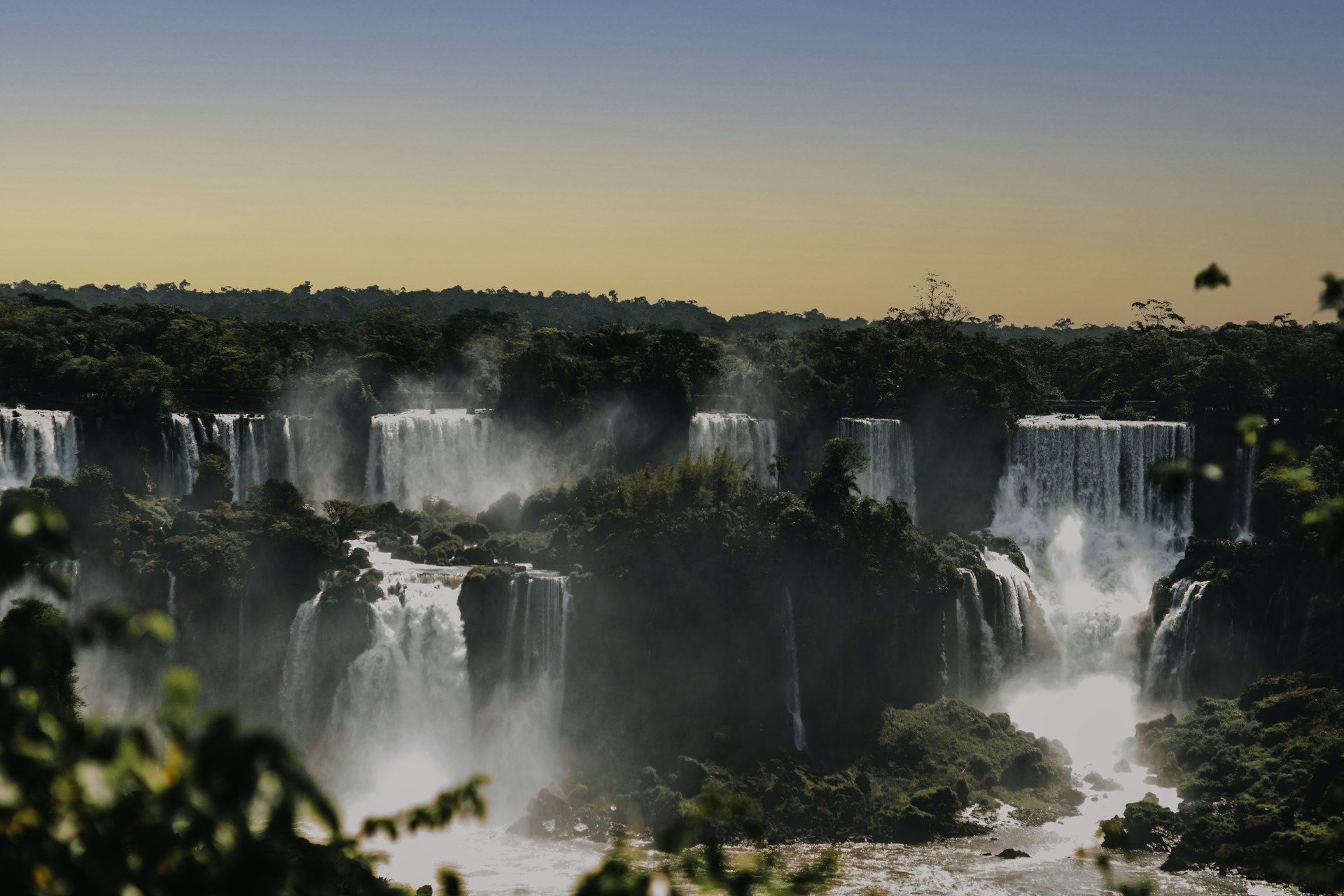
Iguazu Falls: Brazilian Side vs Argentine Side
Two countries, one waterfall system, and a question every visitor asks: Brazil or Argentina? The short answer is both, if you can. The longer answer, from people who run these parks from Foz do Iguaçu every week, is that each side does something the other cannot, and the order and timing you choose will make or break the day.
One waterfall, two very different experiences
The Iguassu (Iguaçu in Portuguese, Iguazú in Spanish) river carves a border between the Brazilian state of Paraná and the Argentine province of Misiones, and the falls straddle it. Roughly 80 percent of the cataracts sit on the Argentine side, while the grand, front-on panorama sits on the Brazilian side. That single fact explains almost everything about how the two visits feel.
From Foz do Iguaçu, in Paraná, you look across at the wall of water; from Puerto Iguazú, in Argentina, you walk out into the middle of it. Neither is a lesser version of the other. They are two halves of the same wonder, and the most common regret we hear is from travelers who saw only one and did not realize what they missed until they were already home.
The Brazilian side: the panorama
The Brazilian park, Parque Nacional do Iguaçu, is built around a single well-designed 1.2-kilometer trail that keeps the falls in view the whole way and ends on a walkway that reaches into the base of the Garganta do Diabo, the Devil's Throat. This is the postcard: the entire horseshoe laid out in front of you, rainbows in the spray, and a viewing platform where you will get comfortably, gloriously soaked.
It is compact and efficient. A relaxed visit takes half a day, which leaves room for the Parque das Aves bird sanctuary across the road, or a boat ride beneath the falls. The trail is largely accessible, with panoramic elevators and shuttle buses, making it the gentler option for families, older travelers and anyone short on time or energy.
- Best for: the sweeping, front-on view and photography of the whole falls at once.
- Time needed: a half day is enough; a full day if you add Parque das Aves or a boat ride.
- Effort: light, mostly flat and accessible, with elevators and internal shuttles.
- Signature moment: the Garganta do Diabo walkway, deep in the spray.
The Argentine side: inside the falls
The Argentine park, Parque Nacional Iguazú, is a different creature: a network of steel walkways and jungle trails, plus a little train, that let you stand directly above and beside individual cascades. The Upper Circuit runs along the tops of the falls; the Lower Circuit brings you to their feet; and a long catwalk over the calm upper river delivers you to the lip of the Devil's Throat, where the whole river simply disappears into mist and thunder.
It is bigger, wilder and more physical. To do it justice you need a full day of walking, often six hours or more, and the sheer scale rewards it. If you only have the stamina or the schedule for one immersive day of hiking, this is the side that gives it to you.
- Best for: standing on top of and beside the falls, close and immersive.
- Time needed: a full day; the circuits and the Devil's Throat catwalk fill it easily.
- Effort: moderate, with plenty of walking, stairs and a park train.
- Signature moment: the Garganta del Diablo balcony above the main drop.
If you only have one day, which side?
For most travelers based in Foz do Iguaçu with a single free day, we recommend the Brazilian side. It delivers the iconic image with the least effort and logistics, pairs naturally with the bird park or a helicopter flight, and does not require a border crossing. It is the safe, spectacular choice.
Choose the Argentine side for your one day only if you are a keen walker, you specifically want the up-close, on-top-of-the-water experience, and you are comfortable with a full day of hiking and a border formality. If you are traveling with young children, older relatives, or on a tight schedule, Brazil is the wiser single day.
The ideal plan: both sides, in the right order
With two days, see both. Our preferred sequence is the Brazilian side first, to take in the whole panorama and understand the geography, then the Argentine side the next day to walk inside what you have just admired from afar. Seen in that order, the second day lands with far more impact.
Practically, we suggest starting each park early to be ahead of the tour-bus waves that arrive mid-morning. Keep the two visits on separate days rather than trying to cram both into one; the rushed border double-header is the single most common way people exhaust themselves and enjoy neither side properly.
Logistics, borders and money
The two parks sit about 30 to 40 minutes apart by road, on opposite banks, connected by the Tancredo Neves International Bridge. Crossing to Argentina is straightforward but real: many nationalities need an Argentine visa or reciprocity check, and even visa-exempt visitors must clear immigration on both sides, so allow time and carry your passport. Argentina uses the peso and Brazil the real; both parks now sell tickets online, and Argentina's entry price for foreign visitors is tiered and payable in specific ways that change periodically.
This is exactly where a private, hosted day earns its keep. We handle the tickets, the timing, the bridge crossing and the paperwork, brief you on what each border post expects, and adapt on the day for weather and crowds. Our Iguaçu Falls private tour covers the Brazilian side end to end, and we routinely build the two-country, two-day version for guests who want the complete picture without touching a single logistical detail themselves.
- Carry your passport for the Argentine side, even as a day visitor; check visa rules for your nationality in advance.
- The Brazilian side needs no border crossing from Foz do Iguaçu; the Argentine side does.
- Buy park tickets ahead where possible and start early to beat the mid-morning buses.
- Budget in two currencies, and confirm Argentina's current foreign-visitor entry price before you go.
When to go and what to pack
The falls run year-round. The Southern Hemisphere summer, roughly December to March, brings the heaviest flow but also heat, humidity and afternoon storms; the cooler, drier months from May to September are more comfortable for walking and generally clearer for photography, though volume can dip. Whatever the season, expect spray: on both sides you will get wet near the Devil's Throat, and that is half the fun.
Pack light and practical. Bring a rain poncho or quick-dry layers, closed shoes with grip, sun protection, a dry bag or waterproof case for your phone and camera, and water. If photography or filming is your priority, the light and the crowds change the picture hour by hour, which is precisely what a local guide is for.
- Wettest and most powerful: December to March, hot and stormy.
- Most comfortable for walking and clearer skies: May to September.
- Always bring: poncho, grippy closed shoes, sun protection, a waterproof case and water.
- For serious photos or a filming shoot, plan the hour, not just the day.
Beyond the falls: making the trip worth the flight
Foz do Iguaçu rewards a day or two more. The Itaipu hydroelectric dam, one of the largest in the world, runs excellent tours; the Marco das Três Fronteiras marks the point where Brazil, Argentina and Paraguay meet; and the Templo Budista and the city's Lebanese and Arab community give the region a genuinely multicultural texture that surprises first-time visitors.
For travelers using Iguaçu as the gateway to Paraná, the state opens onto the Serra Verde Express railway down to Morretes, the European-flavored capital of Curitiba, and the historic port of Paranaguá. If the falls are a scouting stop before a longer stay, invest or film in Brazil, we can extend a single tour day into a wider plan across the state, with the same team handling every detail.
Related services
Frequently asked questions
Which side of Iguazu Falls is better, Brazil or Argentina?
Neither is simply better; they are complementary. The Brazilian side gives you the panoramic, front-on view in a compact half day, while the Argentine side lets you walk on top of and beside the falls over a full day. If you can, see both.
How many days do I need to see both sides?
Two days is ideal, one for each park, with the Brazilian panorama first and the Argentine circuits second. Trying to do both in a single day with a border crossing is possible but rushed, and most visitors regret it.
Do I need a passport or visa to visit the Argentine side?
Yes, you cross an international border, so you need your passport and must clear immigration on both sides. Visa requirements depend on your nationality, so check them before you travel; the Brazilian side requires no border crossing from Foz do Iguaçu.
Which side is better for families or older travelers?
The Brazilian side. Its single trail is largely flat and accessible, with elevators and shuttle buses, and a relaxed visit takes only half a day, which makes it far gentler than the Argentine side's long circuits and stairs.
Can you arrange both sides and handle the border crossing for us?
Yes. We regularly build the two-country, two-day itinerary, handling tickets, timing, transport and the bridge crossing so you simply enjoy the falls. Our private Iguaçu Falls tour covers the Brazilian side, and we add the Argentine day on request.