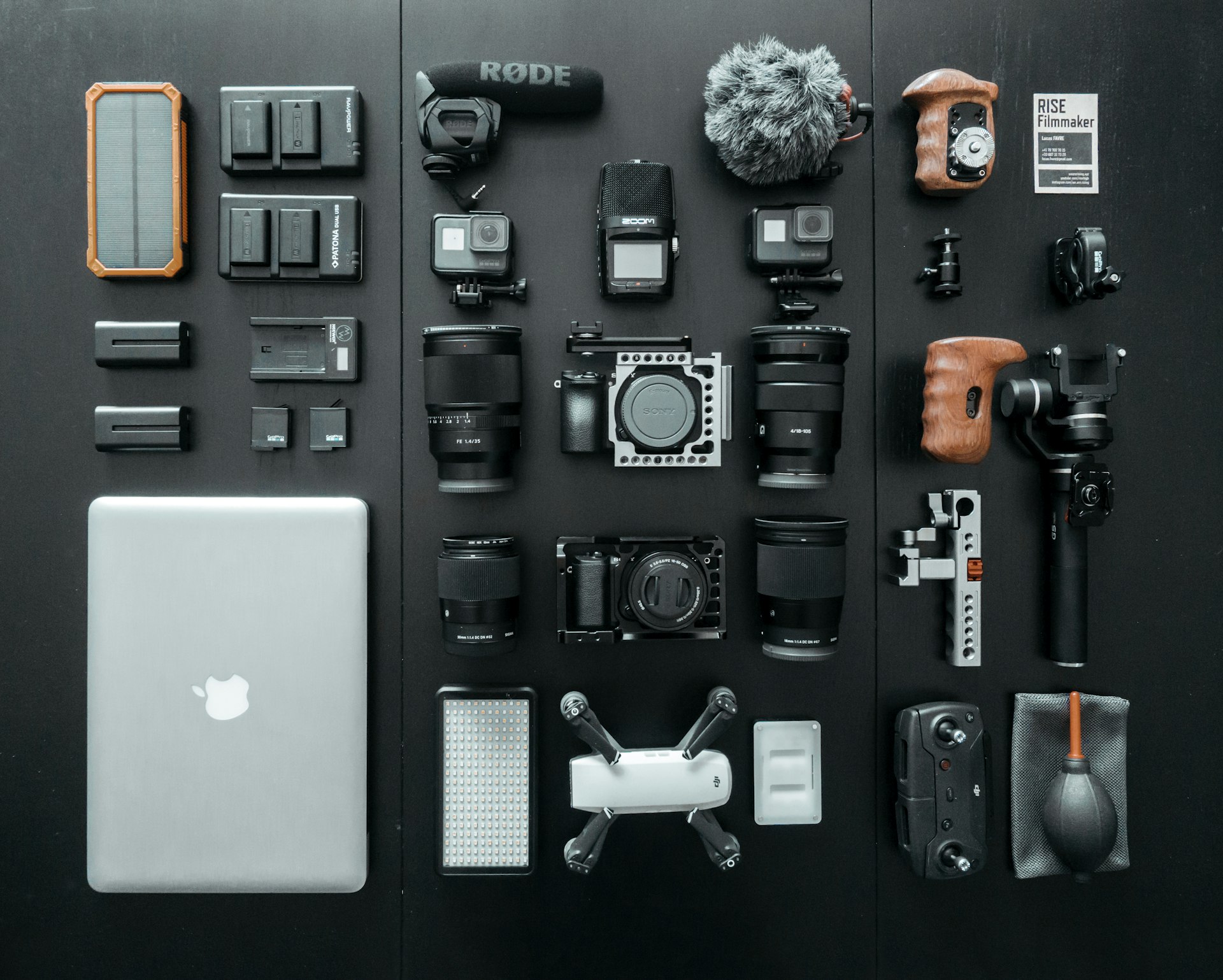
Bringing Camera Gear Into Brazil: ATA Carnet and Temporary Admission
A single missing serial number can turn a smooth arrival into a case of gear locked in a bonded warehouse while your shoot days burn. Bringing professional camera equipment into Brazil is entirely doable, but customs treats it as commercial cargo, not holiday luggage. This guide explains the two legitimate routes, the ATA Carnet and temporary admission, what officers at Curitiba airport and the Port of Paranagua actually expect, and how to keep your kit moving instead of impounded.
Why camera gear is different from ordinary luggage
Brazilian customs, run by the Receita Federal, draws a hard line between personal belongings and professional equipment. A tourist with one camera and a couple of lenses usually passes without a second look. A crew arriving with cine cameras, a lens set, lighting, wireless kits and cases full of accessories is carrying goods that have commercial value and could, in theory, be sold in Brazil. That possibility is exactly what the rules are built to police, because selling imported gear locally without paying import duties would undercut the domestic market.
The consequence is simple but often misunderstood: expensive gear that is not properly declared and documented can be held, taxed as a permanent import, or seized outright. None of this means you cannot bring your equipment. It means you enter under one of the temporary regimes designed for it, prove the gear is yours and will leave again, and discharge that promise on the way out. Do that and you pay no import tax. Skip it and you can face a deposit equal to the taxes, a hold, or confiscation.
Route one: the ATA Carnet
The ATA Carnet is an international customs document, often called a passport for goods, that lets you move professional equipment across borders temporarily without paying duties or taxes in each country. Brazil is part of the ATA system, so a Carnet issued by your home chamber of commerce is recognised here. For established production companies and touring crews it is frequently the cleanest option, because the paperwork is prepared before you fly and the guarantee is already lodged in your own country.
A Carnet lists every item with its make, model, serial number and value, and that list becomes the contract. When you arrive, customs stamps the Carnet to record the temporary import; when you leave, they stamp it again to confirm the same items are going home. As long as everything on the list leaves the country, no tax is due and the guarantee is released. The discipline it demands is precision: the physical gear in your cases must match the Carnet exactly, item for item and serial for serial.
The Carnet is not always the right tool. It has issuing fees and a security deposit, it must be arranged in advance, and for a small kit or a short shoot it can be more machinery than the job needs. That is the judgement we make with every client before anyone books a flight.
- Best for: professional crews, high-value kit, and productions touring several countries
- Prepared in your home country before departure, so nothing is improvised at the border
- Requires an exact item list and a refundable guarantee held by your issuing chamber
Route two: temporary admission (Admissao Temporaria)
Brazil's own temporary import regime, the Regime de Admissao Temporaria, achieves the same end without an ATA Carnet. The gear enters for a defined period, the import taxes are suspended rather than charged, and the equipment must be re-exported before the deadline. It is filed locally with the Receita Federal, usually through a licensed customs broker (despachante aduaneiro), and it suits crews arriving from countries without a Carnet, or productions whose plans firmed up too late to arrange one.
Under temporary admission the suspended taxes are typically secured by a guarantee, often a deposit or a bond, which is returned when the gear leaves and the regime is discharged. The paperwork is Brazilian and in Portuguese, the deadlines are real, and an overstay or a failure to close the regime converts the suspension into a full tax bill. This is precisely the kind of filing where a broker who knows the local terminal saves you both money and days.
Choosing between the two routes is not guesswork. It turns on the value of your kit, how many countries you are visiting, how much time you have before the shoot, and whether renting locally would sidestep the question entirely. Our camera gear customs service exists to make that call correctly and then execute it.
What customs actually expects to see
Whichever route you take, the officer at the border is checking one thing above all: that the gear in front of them matches the gear on paper, and that it is plainly professional equipment entering temporarily. The single most common cause of delay is a manifest that is vague, incomplete, or out of date. Serial numbers that do not match, values that look invented, or items in the case that are missing from the list all invite questions, and questions cost hours.
A clean entry rests on a detailed, honest manifest and a clear story: who you are, why you are here, and when you are leaving. Bodies, lenses, monitors, wireless gear, batteries and drones each need to be identifiable. Declared values should be realistic; lowballing to reduce a deposit backfires when an officer disagrees and the whole shipment stalls.
- A line-by-line manifest with make, model, serial number and a realistic value for each item
- Passports and travel dates for every crew member physically carrying gear
- A purpose-of-visit or shooting letter that explains the production and the departure date
- Proof of ownership or a rental agreement for the equipment when asked
- Any filming permits or authorisations already obtained for your Parana locations
Clearing gear in Parana: Curitiba airport and the Port of Paranagua
Most gear entering Parana clears one of two ways. Crews flying in land at Curitiba's Afonso Pena airport, where hand-carried and air-freighted equipment is cleared through the terminal. Larger productions shipping cases, vehicles or heavy lighting by sea come through the Port of Paranagua, one of the busiest ports in South America, where maritime clearance, terminal handling and inland transport all have to be coordinated in sequence.
The two channels feel different on the ground. Airport clearance is usually same day when the paperwork is in order, and the pressure is on speed and matching the manifest to the cases. Port clearance is a longer choreography of shipping documents, terminal fees and scheduling, and it rewards planning weeks ahead. In both, a broker who works that specific terminal daily is the difference between gear that moves and gear that waits.
This is where local presence matters most. We coordinate directly at Curitiba airport and at Paranagua, arrange bonded storage if a hold is unavoidable, and keep the clock from running down on your shoot while a query is resolved.
Avoiding seizure, and when renting locally is smarter
Seizure and costly holds almost always trace back to the same handful of mistakes: no temporary regime at all, an inaccurate manifest, an undervalued declaration, an expired deadline, or a Carnet that was never discharged on exit. Each is avoidable. The re-export step matters as much as the entry: if you leave without closing your Carnet or temporary admission, the guarantee can be forfeited and the taxes fall due even though the gear is long gone. We treat the departure paperwork as part of the same job, not an afterthought.
Sometimes the wisest move is to not fly the gear at all. For shorter shoots, or for heavy lighting and grip packages that are cumbersome to carry and slow to clear, renting from vetted suppliers in Curitiba removes customs risk entirely. A common pattern is a small Carnet or temporary admission for the specialist cameras a director insists on, paired with local rental for everything else. Deciding that split well is part of what we do.
How Brazil4Connect handles it
We manage camera gear customs end to end as an administrative and production partner. We review your equipment list and shoot dates, recommend the ATA Carnet, temporary admission or local rental, build the manifest with serial numbers and HS codes, and coordinate the filing with the Receita Federal through a licensed customs broker (despachante aduaneiro). On arrival we clear the gear at Curitiba airport or the Port of Paranagua, arrange handling and bonded storage where needed, and confirm the kit reaches your location in Parana.
Where legal counsel is genuinely required, we work alongside licensed Brazilian attorneys (OAB), and for clients who cannot be present we can act through a legal representative (procurador) under a proper power of attorney. Our camera gear customs support starts from USD 450 per production, with the re-export discharge handled so your Carnet or temporary admission is closed cleanly and no guarantee is lost. If your shoot also needs airborne footage, we handle that through our drone filming permits service so the aircraft and the camera gear clear under one coordinated plan.
Related services
Frequently asked questions
Do I have to use an ATA Carnet to bring camera gear into Brazil?
No. The ATA Carnet is one clean option and Brazil accepts it, but gear can also enter under the temporary admission regime (Admissao Temporaria) filed locally with the Receita Federal. We assess your kit, budget and timeline to recommend whichever route is cheaper and faster for your shoot.
Will I pay import tax on equipment I am only bringing temporarily?
Normally no. Gear that enters under a Carnet or temporary admission and leaves again is cleared with the taxes suspended, not charged, provided the regime is filed and later discharged correctly. If the paperwork is missed or the deadline lapses, customs can require a deposit or convert the suspension into a full tax bill.
What is the most common reason gear gets held at the border?
An inaccurate or incomplete manifest. Serial numbers that do not match, missing items, or unrealistic declared values all trigger questions that cost hours. A precise, honest line-by-line list is the single best protection against a hold.
Can my gear be seized, and how do I avoid it?
Yes, if it enters with no temporary regime, on false paperwork, or is never re-exported, customs can hold or seize it. Entering under the correct regime, declaring honestly, and closing the Carnet or admission on departure keeps that risk near zero, which is exactly what we manage.
Is it easier to rent gear in Parana instead of importing it?
Often, yes. For shorter shoots or heavy lighting and grip, renting from our vetted Curitiba suppliers avoids customs entirely. We frequently combine a small Carnet for specialist cameras with local rental for the rest.
Can you clear equipment arriving by sea at Paranagua?
Yes. For large productions shipping cases and vehicles through the Port of Paranagua, we coordinate the maritime clearance, terminal handling and inland transport to your location, under the same temporary-import framework and with a broker who works that port.